
The Zeta Sigma Chapter of Sigma Nu Fraternity is one of the oldest and most distinguished Greek organizations at Gettysburg College. What you see today, a thriving chapter, an owned limestone house, a century of tradition, was built incrementally, by generations of brothers who committed themselves not merely to membership, but to something larger and more lasting than themselves.
If you are considering fraternity life at Gettysburg, you are considering which chapter will define your experience here. This page is written in the belief that understanding where a fraternity comes from is inseparable from understanding what it stands for, and what it will give you.
★
The National Fraternity
Sigma Nu Fraternity: Founded 1869
Sigma Nu Fraternity was founded on January 1, 1869, at the Virginia Military Institute in Lexington, Virginia, by three cadets, James Frank Hopkins, Greenfield Quarles, and James McIlvaine Riley, who were determined to resist a culture of hazing and coercion that characterized fraternal organizations of the era. Rather than perpetuate those traditions, they built something new: a brotherhood founded explicitly on the principles of Love, Truth, and Honor.
That founding act, choosing honor over convenience, principle over conformity, is not merely a historical footnote. It is the defining character of Sigma Nu. The fraternity grew from those three cadets at VMI into one of the largest fraternities in the United States, with more than 250 chapters and a membership that has included U.S. senators, governors, athletes, astronauts, and leaders across every sector of American life. What connects them is not the letters, it is the values those letters represent.
Notable Sigma Nus: Harrison Ford · John Elway · Phil Mickelson · Pat Riley · Bear Bryant · Mark Warner (U.S. Senator) · Clarence Kelley (FBI Director) · Vance Brand (NASA Astronaut) · Archie Manning · Bob Barker · Luke Bryan · Tom Osborne
They represent what is possible when men commit themselves to excellence for life.
★
1891
The Star Club — Where It Began
Zeta Sigma’s roots at Gettysburg College reach back further than most chapters in the entire Sigma Nu organization. In January 1891, sixty-three years before the chapter’s official chartering, a group of students organized what would become known as the Star Club, taking the name from an earlier organization founded in 1876. The club developed its own symbols, rituals, and sense of purpose around the pursuit of truth, beauty, physical development, and spiritual growth.
Over the following decades the organization evolved through two successive names and identities, the Criterion Club, formed in 1923, and then Phi Kappa Rho, chartered in 1929, each iteration deepening its commitment to the ideals that would eventually find their fullest expression under the banner of Sigma Nu.
In 1932 the Criterion Club and the Star Club merged under the Phi Kappa Rho name, uniting two traditions that traced independently back to the nineteenth century. The combined chapter carried those traditions forward through the Great Depression, World War II, and into the postwar era.
★
May 15, 1954
Zeta Sigma Is Born
By the early 1950s, Phi Kappa Rho was the last remaining local fraternity at Gettysburg College. On February 15, 1954, the brotherhood voted 24 to 1 to go national, and 25 to 0 to petition Sigma Nu. On May 15, 1954, Phi Kappa Rho became the Zeta Sigma Chapter of Sigma Nu Fraternity in installation ceremonies at Weidensall Hall, with a ritual team from Carnegie Tech’s Delta Sigma Chapter presiding. Twenty-one members and alumni were invested with the white star.
The toastmaster for the installation banquet was the Rev. Harvey Daniel Hoover, a member of the original Star Club and of Phi Kappa Rho, a living link across sixty-three years of fraternal history. Hoover would later be elected Grand Chaplain of Sigma Nu, the only Zeta Sigma ever to hold a High Council position.
— Zeta Sigma Chapter History, 1989
The chapter quickly distinguished itself on the Gettysburg campus. By 1956, just two years after chartering, Zeta Sigma held the highest GPA among all fraternities. That same year, brothers undertook the chapter’s first formal community service project, launching a philanthropic tradition that continues to this day.
Charter Members — May 15, 1954
Robert Barry Deickler · Eugene Frederick Irschick · Richard David Moyer · Ainsworth Howard Brown · George Wesley, Jr. · Samuel Theodore Reiner · Michael Wilford Lau · Samuel Moffitt Eppley · Earle Stuart Bower · Ernest Wilhelm Helmke · James Richard Krum · Richard Edgar Wolfe · Robert Katz · Gerald Hert · James Duncan Kenna
★
1970 — Present
The Castle — 55 West Broadway
In February 1970, the Zeta Sigma Property Association purchased the stately stone residence at 55 West Broadway for $80,000 from Marion Dickson, widow of Dr. John McCrea Dickson, a Gettysburg College alumnus, seven-year trustee of the college, and the founding chief surgeon of Annie M. Warner Hospital. The house, built between 1929 and 1930, was designed as a permanent family residence of distinction. Brothers took one look at its imposing limestone walls and steep rooflines and named it immediately: The Castle.
The Castle has been the home of Zeta Sigma ever since. It is owned outright, not rented, not leased, but owned, by the chapter’s alumni property association, making Sigma Nu one of only three fraternities at Gettysburg College with the distinction of owning its own house. Both mortgages on the property were paid off and ceremonially burned by the brotherhood, the first in 1985 and the second on April 25, 1987, on which occasion the Mayor of Gettysburg declared the day Sigma Nu Day in the borough.
The house has been renovated comprehensively in recent years: New roof, refinished hardwood floors, fully updated bathrooms and bedrooms, modernized common areas, and an overhauled basement, while preserving the original architectural character that sets it apart from every other building in Greek life at Gettysburg. It sits barely half a block from the academic quad, closer to the heart of campus than many of the college’s own dormitories.
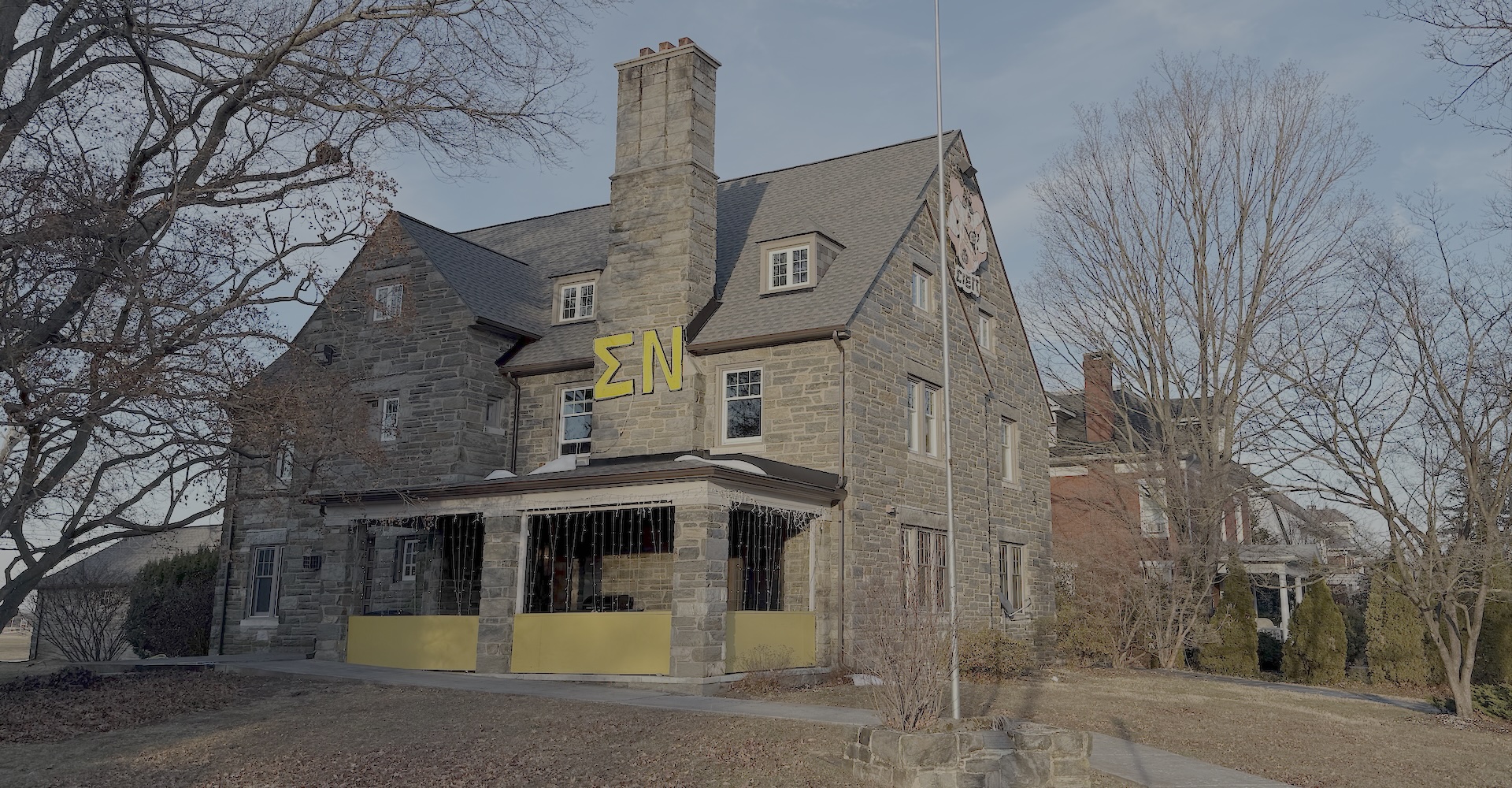
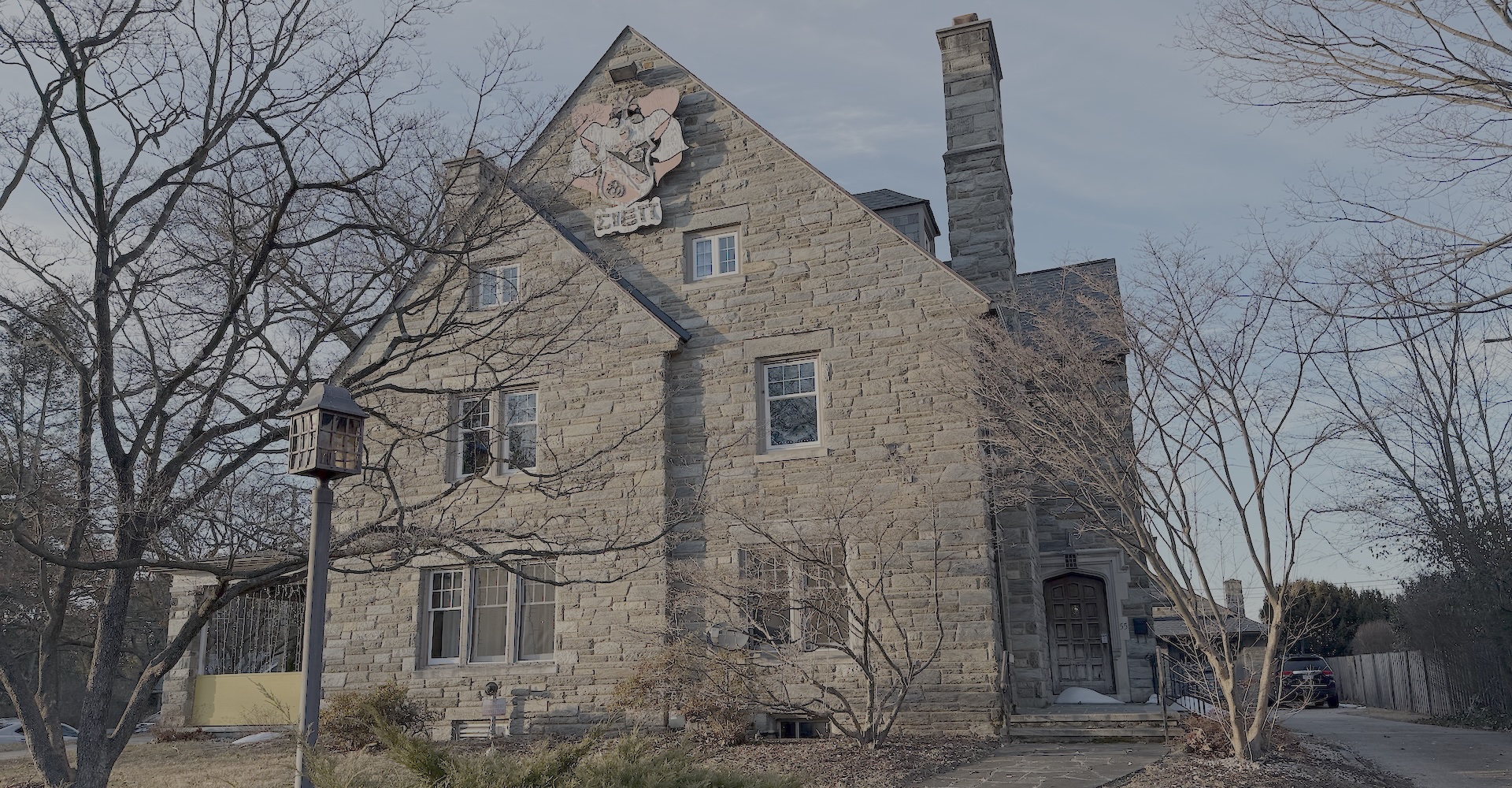
55 West Broadway, The Castle, home of the Zeta Sigma Chapter since 1970
★
What We Stand For
The Values of Zeta Sigma
The Creed of Sigma Nu is not aspirational language. It is a statement of operating principle, a description of how the men of this chapter are expected to conduct themselves every day, not only in the context of the fraternity but in every dimension of their lives. Prospective members who join Zeta Sigma are joining an organization that takes these words seriously.
To believe in the Life of Love,
To walk in the Way of Honor,
To serve in the Light of Truth —
This is the Life, the Way, and
the Light of Sigma Nu —
This is the Creed of our Fraternity.
The Creed of Sigma Nu
A genuine commitment to the wellbeing of your brothers, present and future, and to the communities you inhabit.
Intellectual honesty, academic integrity, and the courage to engage the world as it is rather than as it is convenient to believe.
Conduct worthy of the name you carry, in the classroom, in the chapter house, in your career, and in the decades after graduation.
★
The Chapter Today
Where Zeta Sigma Stands
The Zeta Sigma Chapter of today is not coasting on its history. It is building on it. The chapter has grown substantially in recent years, winning the overall Greek Week championship in 2025, the first structured Greek Week Gettysburg has hosted in years, and taking home three awards at the Order of Omega Greek Awards Ceremony in the same year: Fraternity Chapter of the Year, Outstanding Alumni Engagement, and the Unsung Hero Award.
Academically, the chapter consistently ranks among the top fraternities in GPA at Gettysburg. Brothers span every academic division of the college. The chapter’s LEAD programming, Sigma Nu’s national leadership development curriculum, operates at the chapter level through structured workshops and at the national level through the annual pilgrimage to the Leadership Development Center at VMI in Lexington, Virginia, a tradition the chapter has revived and deepened in recent years.
Philanthropically, the chapter’s annual Sigma Noodles event raised over $1,300 for the Alzheimer’s Association in its inaugural year, with the chapter committed to exceeding that figure annually. Service to the local Gettysburg community continues a tradition that stretches back to the chapter’s very first community project in 1956.
Order of Omega Greek Awards — 2024–2025
★
Chapter Leadership
Officers & Advisors
The chapter is led by a Commander and an elected officer corps that manages every dimension of chapter life, from financial operations and membership to scholarship, community service, and alumni relations. Leadership at Zeta Sigma is not a title; it is a responsibility earned by election and held to a high standard.
| Position | Responsibility |
|---|---|
| Commander | Chief executive of the chapter; presides over all meetings and operations; primary liaison to the college and national fraternity |
| Lieutenant Commander | Deputy to the Commander; oversees internal chapter operations and serves as acting Commander when needed |
| Treasurer | Financial management of the chapter; dues collection, budget oversight, and coordination with the alumni property association |
| Recorder | Chapter secretary; maintains official records, correspondence, and the permanent minutes of the brotherhood |
| Marshal | Oversees the candidate education program; responsible for the integrity and quality of the pledge process |
| Sentinel | Maintains order at chapter meetings; manages house security and chapter property |
| Alumni Relations | Maintains the chapter’s connection with alumni; coordinates the 55@55 campaign and engagement events |
| Chapter Advisor | Alumni advisor to the active chapter |
| Faculty Advisor | Faculty member of Gettysburg College serving in an advisory capacity to the chapter; a role held continuously since 1964 |
For current officer information, contact the chapter through this website or through the alumni Facebook group.
★
An Invitation
What Membership in Zeta Sigma Means
If you are reading this as a prospective member, understand this: the decision to join a fraternity is among the most consequential you will make at Gettysburg College, not because of the social calendar or the house, though both are exceptional, but because of the men you will stand beside, and the standards to which they will hold you.
Zeta Sigma does not ask you to check your ambitions at the door. It asks you to bring them in. The chapter’s history is a record of men who led, built, served, and excelled, not despite their fraternity membership but because of it. The friendships formed in that limestone house on West Broadway are the kind that persist across careers, decades, and the full arc of a life well lived.
This is not just four years. This is a brotherhood for life.
— Charles M. Shively, Zeta Sigma #348, 1979
Zeta Sigma Chapter · Sigma Nu Fraternity · Gettysburg College
55 West Broadway · Gettysburg, Pennsylvania · Est. 1954
Chapter history drawn from A History of the Zeta Sigma Chapter by Charles M. Shively (1979) and Stephen R. Herr (1989)